Monday, August 26, 2013

Chang "My" Noodles

It's been a while since I've posted a recipe. After a week of belated Spring cleaning (meaning a week of eating take out while my house is in a state of disaster) I am sitting down and planning meals for the next few weeks. In the process, I came across one of my favorite recipes. Although not reckless in itself, how I fell in love with this noodle dish was unintentionally, unconsciously and uncontrollably reckless.

Have a great week!

Melissa

Chang "My" Noodles


While pregnant with my oldest daughter, I craved this soup constantly. When my local Thai food restaurant, Typhoon, took it off the menu, I had a pregnancy-hormone induced breakdown in their lobby. There were tears. And sobbing. I'll leave it at that. As a compromise (mostly, I believe to get me out of their lobby), the chef agreed to make it for me every Monday, on which my husband picked it up weekly on his way home from work. 

The restaurant closed last year, but luckily, without pregnancy hormones I could be creative enough to learn how to make it myself rather than throw a tantrum (although I think there may have still been some tears). After some research, I was able to adapt a Seafood Hot Pot recipe by Sam Hazen from Self Magazine (November 2006) to reflect the flavors of this traditional soup from the Chang Mai region of Thailand (an area known for its beautiful silver). This soup is also good with shrimp in place of the chicken.


1 Tbsp of olive oil
1 small diced onion
2 thinly sliced shallots
1 minced clove of garlic
1 large thinly sliced raw chicken breast
1 cup of sliced mushrooms
3 cups of chicken stock
1 can of coconut milk
2 Tbsp fish sauce
3 Tbsp of rice vinegar
1 tsp curry powder
1 Tbsp soy sauce 
1 Tbsp sugar
4 ounces of rice noodles
1 lime, juiced
2 cups of baby spinach
6 sprigs of cilantro, plus some chopped for garnish
1 cup of bean sprouts


1. In the olive oil, sauté the shallots, garlic and onion until soft, about 3-5 minutes.

2. Add the chicken breast to the onion mixture and cook for 1-2 minutes. Add 1 cup of mushrooms and cook for an additional 1-2 minutes.

3. Add chicken stock, coconut milk, rice vinegar, fish sauce, Thai chili paste, curry powder, soy sauce and sugar. Bring to boil over medium high heat.

4. Add cilantro and simmer for 10 more minutes.

5. While simmering, bring a medium saucepan of water to boil. Stir in rice noodles and remove from heat. Let stand 7-10 minutes until soft. Drain.

6. Remove cilantro. Season soup as desired with the juice from one lime.

7. Add baby spinach and allow to wilt.

7. Divide noodles between 4 bowls and top with soup. Garnish with bean sprouts and chopped cilantro.

PS - If you are in the Los Angeles area, be sure to try out AmazonFresh grocery delivery services, now available in your area. We've been using it here in Seattle for years and its great!

Sunday, August 18, 2013

Warm Connections


Hilary's Garden: Brass, Sterling silver and spinel by Melissa Cable


Warm Connections

Anytime I learn something new, I find myself in a phase that I call the "why phase." This is a period of time in which I question whether I am doing a particular technique out of habit, because it is new and I am excited to apply it, or because, simply, it is the right thing to do in that particular circumstance.

Case in point, now that my soldering has improved, I want to solder everything! However, my most recent creation really pushed me to stop and consider when to combine cold connections with soldering...what I am going to call "warm connections" for the sake of this discussion.

Hilary's Garden was commissioned by Hilary Halstead Scott from Halstead Beads for their 2014 catalog (available in January). I've had Hilary as student and know she has the mad skills to create some killer flowers herself, so I was especially honored and excited that she would ask. Even more inspiring was that there were no parameters...no request to use certain items, no specific jewelry type, size, or color...I had a blank canvas to work from.

I happened to have some Sterling silver branch pieces that they had in their catalog and they became my source of inspiration. They had three loops - one on each end and one in the middle. Rather than give you a step-by-step on how to make this, I believe there is more learning in the thought process. I first considered:

1) Connecting the branches together with jump rings and riveting the flowers to the center loop. (Problem: The flowers covered most of the branches.)

2) Soldering the flowers together and between two branches. (Problem: The branches became solid, meaning the necklace would not have any flexibility.)

So I finally decided on a hybrid. I soldered the flowers together and then soldered them to a tube rivet. I then use the tube rivet to connect the branches together, which allowed them to still pivot freely. Surprisingly, it took me a long time to get to that solution...I had a mental block with soldering something that would eventually be riveted anyways! But when I finally stopped and realized that this "warm connection" had purpose, it was the right thing to do, the choice became clear.

It is also of interest to note that once I was all done with the necklace, I didn't like the look of the empty center rings on each branch and I was frustrated with myself that I hadn't soldered on some brass ball bearings from the start. At this point, everything was polished and ready to go.

Warm connection to the rescue! I soldered the ball bearings to a tube rivet and riveted them on. Now, if I were to remake this necklace, I would solder them in from the start, but finally becoming comfortable with using "warm connections" allowed me to make, what I feel, a much stronger piece with the addition of the brass accents.

To sum up the lesson learned: You never graduate from one technique to another, you simply add a new technique to your toolbox.

Thanks for stopping by, and create recklessly this week!

Melissa

PS - Congratulations to Rebecca Rose of Sculpturings, this year’s winner of the Halstead Grant for design excellence and business strategy acumen in the silver jewelry market! Be sure to check out her work...its gorgeous!


Wednesday, August 14, 2013

Pinterest Inspired

The Artists Synchroblog is a group of bloggers who post every other month on the same topic, sharing our experience or perspective. On alternate months we undertake a Pinterest Project where we each take inspiration from a pinterest picture, create something (art, a meal, a DIY project, etc) and then post about it.


This month's topic: Pinterest Inspirations


Melissa Cable (Copper, C-Koop enameled headpins, air plants)

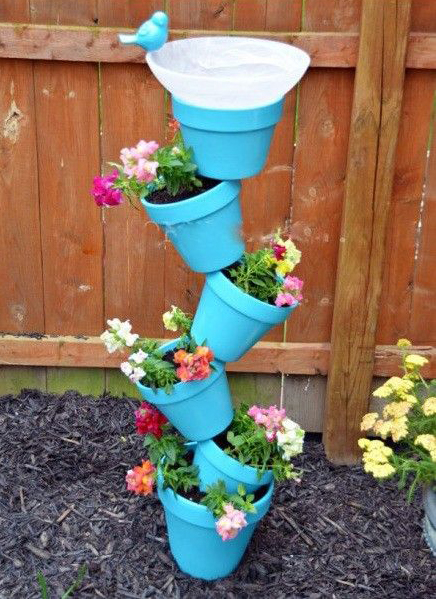
This month we were tasked with creating something inspired by a Pinterest pin. I had seen this planter last year and pinned it so that we could make it for my mother-in-law for Mother's Day. It was the perfect inspiration for my kitschy pendant.


This pendant really stretched my soldering skills! Believe it or not, the plants are real. They are "air" plants and just require a light misting now and again. I'll be interested to see how this affects the patina of the copper over time. 

Want to give it a try? Step-by-step instructions are below...sorry there are not more photos...I got so excited while making this that I forgot to stop and shoot pictures!

1. Start with a trip to the hardware store (yay!) to buy 1", 0.75" and 0.5" copper couplings and some 3/32" copper tubing. I suppose you could buy slip caps and have less soldering.


2. Apply a pattern on your couplings by inking a stamp with Stayz On ink and rolling the coupling across the pattern. Heat set the ink with a heat gun.

3. Etch the copper. See the recent issue of Art Jewelry for an article I wrote on vertical etching and the Edinburgh Etch. I create a hook using a 3mm Faux Bone strip so that I could hang my couplings into the solution.


4. After the copper is etched and cleaned, use a jewelers saw and cut a 1" piece from each coupling. Lay the edges flat on 320 grit sandpaper and sand flat, follow up with 400 grit sandpaper.

5. Solder each coupling piece to a piece of 22g copper sheet to create a bottom for each pot. The 1" coupling is thick and requires quite a bit of heat, but I was still able to accomplish the soldering using a butane torch and medium solder.

6. Use a jewelers saw to cut off the excess copper sheet.

7. Use dapping punches to flare the top of each pot. Turn the pot over and hammer down flat on the bottom to get the edge of the pot to flare evenly and flatten some.

8. File the bottom edge and the rim edge. I used a sandpaper disk on my flexshaft.

9. Drill a 3/32" hole in the center bottom of the medium and small pots.

10. Pickle if needed and then solder a 2.75" piece of 3/32" tubing to the inside center bottom of the large pot (I used easy solder). I flared the bottom of the tube to give it more stability while I soldered. 

11. Solder 1-2 headpins inside each pot so that you can use them to secure the plant. I used enameled headpins by C-Koop with soft solder to add a pop of color. This can be tricky as the pins easily melt if they get too hot.

12. Feed the medium pot onto the tubing and position it as desired on top of the large pot. Locate a solder point and solder the medium pot in place (I used easy). I soldered the inside rim of the pot to the tubing. Repeat with the small pot. I soldered the bottom of the small pot to the rim of the medium pot.

13. Solder a ring to the top of the tubing (I used easy), making sure to place your chain in the ring before soldering. I had also soldered a small brass ball bearing on the top of the tubing to give it a finished look, but it fell off and my 4 hour time limit was running out!

14. Pickle, patina and polish. Insert the plants and wrap the headpin(s) around them to keep them in place.

Have fun with it and create recklessly!

Melissa


Be sure to check out the other great Pinterest inspirations by my fellow Synchrobloggers...what an awesome group!!


    Thursday, May 16, 2013

    Words Have Meaning

    The Artists Synchroblog is a group of bloggers who post every other month on the same topic, sharing our experience or perspective. On alternate months we undertake a Pinterest Project where we each take inspiration from a pinterest picture, create something (art, a meal, a DIY project, etc) and then post about it.

    This month's topic: Words Have Meaning


    Time of My Life (2011)
    Faux Bone, Copper, Millefiori, Steel, Brass, Watch Parts, Oil


    I have to admit that when I saw the assignment for this post, I was a bit hesitant. I don't often use words in my work. I was at a loss until I took a closer look at my piece above, which will be published in Lark's upcoming 500 Series: Art Necklaces book releasing this July (page 42 - and trust me, glancing through the preview I am so very honored - and a bit overwhelmed - to be included among such amazing artists).

    Until now, I had forgotten about the thought process I used in making this piece. And, I'll be honest, it is not easy to share personal narrative. This piece was made just after my 40th birthday and after I closed my bead shop. My daughter had started kindergarten that year and I had just completed my first book, Spotlight on Wire. My life had changed in many ways and I was, frankly, struggling to understand my place, my work...me. 

    It was the first intentional narrative work I tried and everything I did to the piece had meaning.  I stamped the word "TICK" on one side, intending it as the front, and the word "TOCK" on the other. However, just as I was about to drill the holes to inset the tiny glass millefiori, I stopped and asked myself why I chose "TICK" as the front. I had just assumed that was the front and was giving it no thought at all.

    I stopped myself from drilling and walked away from the piece that night. I thought a lot about what those two words, "TICK" and "TOCK," actually mean. They symbolize time, they have a natural sequence, they were alliterative and rhythmic. I then explored the letters as if they were markings rather than words. If they were maps, "TICK" started with roads that lead in just one place ("I"), or ended in a "T" stop where you were forced to choose one direction or another. "TOCK" started with a different marking. Its roadmap lead you in circles (the "O") but still ended in the road choice that merged in and out of a main path (the "K"). 

    The choice became very clear to me. "TOCK" was the front of the piece. It denoted time (having turned 40), reminded me not to make past mistakes (the "O"), gave me permission to follow many paths (the "K") and on top of that, I was able to use the words as an abbreviation - "TO Chris and the Kids"...my family who is represented in the piece by the millefiori. Okay, feeling a bit naked now!

    Letters have power when they transcend their order into words and I will forever be reminded of that when I see this piece. 

    Create Recklessly this week!

    Melissa


    Please visit the other bloggers this month:


      Thursday, April 4, 2013

      Faux Bone Texture Trick

      Needle tracing tool as a texture tool


      Last Fall I taught a workshop in the beautiful Oregon wine country (poor me). The venue was Fusion Headquarters owned by artists Gil and Carmen Reynolds. First of all, if you are ever in the Newburg, OR area, the Reynolds have the most adorable apartment you can rent while touring neighboring wineries and they are two of the most charming hosts you will ever meet. 

      They are first and foremost, however, accomplished business owners and artists and have a passion for teaching. While I taught students different ways to incorporate their glass work into finished jewelry, Gil and Carmen explored some of the innovative ways they’ve developed for working with glass. One of my favorites was a product called liquid stringer. It can be mixed with glass powder and piped onto glass or mixed thicker and made into a clay. The versatility of this material is amazing and I immediately began playing with ways to pipe it into freeform shapes and will be experimenting much more with this material this year!


      Gil and Carmen worked with Faux Bone for the first time and I am proud to say they loved it. They even made nearly identical pieces without even knowing it (he's laughing behind that dust mask)! And as always when I teach, I learned something too. Gil used a needle tracer to trace his saw pattern out on Faux Bone and I was fascinated by all the tiny dots it left. So, I rolled it around on a piece of Faux Bone and rubbed in some acrylic paint to see what would happen. It produced great, finely detailed texture (top photo). Looks like another tool I will be adding to my bench soon (poor me).

      Visit Gil and Carmen on facebook!


      Monday, April 1, 2013

      How to Turn Your Flexshaft Into a Potter's Wheel


      Last month, I took a pottery class at The Pottery Loft Studio in Everett, Washington. Evelia Sanchez (below left, with my lovely classmate Karin) took us through all of the necessary steps to throw a clay pot, from how to kneed the clay, loading the clay onto the wheel and work the clay before opening it into a pot.  That's me below, working on my pot and the pot finished and embellished a bit. I had a blast!


      Of course, I immediately wanted to go out and buy a potter's wheel...but reality set in and I knew I had not the time or funds to go down this path. But, like most new techniques I learn, it haunted my brain. I really wanted to make some small forms to incorporate into my other work, but found handforming cumbersome. And then it hit me, I had everything I needed right at home!

      Before I proceed, I should mention that this tutorial, although it feels like an April Fools joke is real!

      Creating a Potter's Wheel Using a Flexshaft


      1. Gather your supplies. You will need a round Ziploc container lid, screw mandrel and some silicone adhesive.


      2. Drill a hole in the center of the lid (which is marked with a divot), place the lid on the screw mandrel with the screw on the inside of the lid, and apply silicon around the mandrel to prevent water for dripping through onto your handpiece.


      3. Place your flexible shaft handpiece in a vise. I have a nylon attachment that holds my handpiece, helping me to avoid damaging the handpiece and giving it a good, firm grip. Throw a lump of kneeded clay onto the lid, centered as best you can. Make sure it is adhered to the lid. Place a bowl of water nearby.


      4. Using your foot pedal, start the "wheel" spinning, very slowly. This reminded me why I need a new pedal. Mine, the standard one that comes with a Foredom, is very touchy and hard to keep at a low speed. Moisten the clay and your fingers. Position two fingers on each side of the clay, and one finger on the other side, giving it gentle pressure. On a full size wheel this would be your whole hands.


      5. Keep adding water as needed by dipping your fingers in the bowl. Once the clay raises, use your finger to push it back down. You are working towards making sure the clay is truly centered, and that there is no wobble as you work the clay up and down. What I kept forgetting to do was anchor my hand by placing my thumb on top of the other thumb. This has come up in both the pottery class and a flexshaft class I took. It allows for more control.


      6. Once the clay goes back down into a squat cylinder, it is time to open the pot. Gently place a finger on top of the clay,pushing downwards and then pushing the clay between your finger and the thumb on the outside (once again forgetting to anchor my thumb). I also tried opening the pot using a nail set. It worked perfectly and I had more control (below).


      I still have a lot more playing (lot more = years) before I get my ceramics skills down, but the wheel worked just fine. I will, however, be seeking a slightly firmer lid with a bigger lip. My shirt, my dust collector hood and my morning coffee took the brunt of the spray when I got a little crazy with the water!


      Create recklessly this week!

      Melissa